Individual psychotherapy
We are often strangers to parts of ourselves.
Psychotherapy is a place to begin the conversation.
🇺🇦🇬🇧 Sessions in English and Ukrainian
Psychotherapist, psychologist
Psychotherapy for people seeking not quick solutions, but a deeper understanding of themselves, their relationships and their experience.
I work with adults and couples through anxiety, loss, crises, recurring patterns and questions without simple answers.
Book a consultation ↗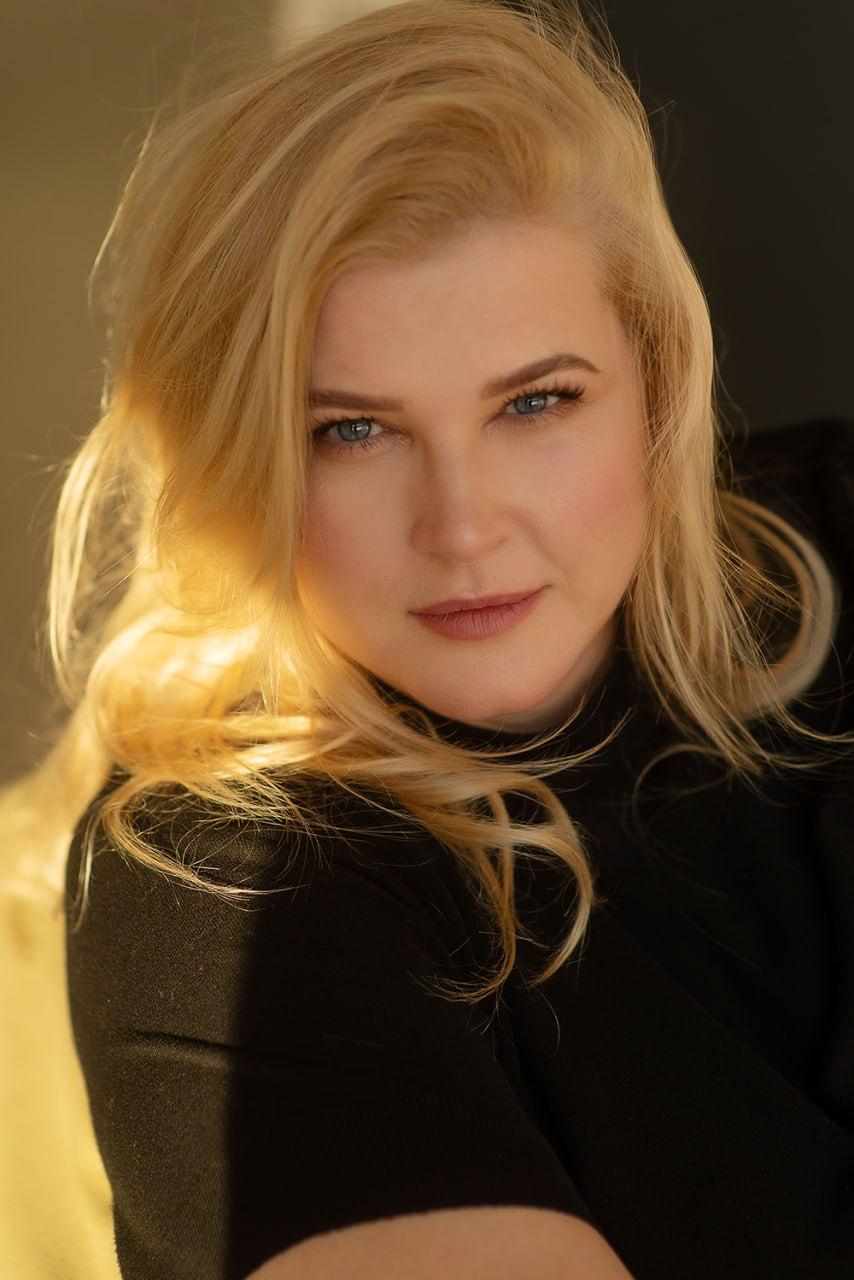
Therapy
We are often strangers to parts of ourselves.
Psychotherapy is a place to begin the conversation.
It is never only about two people. There is also the relationship.
That is where our attention begins.
Method & approach
The psychoanalytic approach helps us notice not only what is happening, but also the hidden logic behind repeated feelings, choices and relationships.
More ⌃Psychoanalysis is a unique philosophy, an ethic, a particular way of thinking, and a form of psychotherapy that allows a subject to reach a position of absolute honesty with themselves. Through this, conflicts within one’s mental life are resolved. The psychoanalytic process is akin to a jeweler's craft. It is neither quick nor easy, but in the end, given sufficient desire and determination, something marvelous and unique can emerge.
I work with adults. The main tool in my work is language — above all, the language of the person who comes with a question.
When I work with a couple, three languages emerge: his, hers, and the third, shared language that the two create between themselves. In international couples, this is especially distinct: behind every word stands not just a person, but their culture, history, and ancestral experience. My job is to help this third language find its voice, so that two people can hear each other even where they seemed to be speaking different languages.
Most people do not come when things become unbearable, but when they notice that what they have been running from all their lives is somehow beside them again. The same type of partner. The same argument in different words. The same feeling of not being heard — in a new room with new people.
We tend to think this is happening to us. Most often, it is something that we, without knowing it, are recreating.
If you recognize yourself here, perhaps it is time to dare to have a conversation.
There are no universal scripts. Regular meetings, confidentiality and attention to your unique experience create the conditions for lasting change.
More ⌃In a certain sense, the question of what it means to be a psychoanalyst is partly a question of what we do. As psychoanalysts, we undergo a very long training, which prepares us, in essence, to develop what Keats called "negative capability" — the capacity to quiet oneself internally in order to create a space and genuinely try to know the person in front of us, and what is happening within them.
This, in fact, is what empathy is: you quiet yourself and make room for the other. You use your own emotional system to connect with them and think alongside them. The idea is to quiet the internal noise, to attune, to genuinely try to know the person before you, and to let their unconscious emerge.
You create a space in which things can appear that the person themselves had not suspected. And when this happens — you truly come to know them. And you begin to care about them.
Learning this is a long process. And it passes precisely through one's own analysis and psychotherapy, and later, during practice, through supervision.
And perhaps the hardest part of this training is not the mastery of technique, but the gradual relinquishing of what the psyche clings to most: the wish to know in advance, to categorise, to recognise the familiar where what is actually present is the unfamiliar. One's own analysis teaches precisely this — to tolerate periods in which you understand nothing, in which the patient is unintelligible even to themselves, and not to fill that emptiness with a premature interpretation or a reassuring explanation.
Bion called this reverie — a state in which the analyst allows themselves to receive the undigested, unformulated fragments of another's experience, without rushing to give them shape. This is not passivity. It is, on the contrary, a highly active internal labour, one that requires endurance, discipline, and, to a considerable degree, trust in a process one does not control.
And here lies the paradox of our profession: the better trained you are technically, the less technical intervention is actually needed in the room. Presence — genuine, not performed — matters more than any intervention. The patient senses the difference between an analyst who listens in order to respond, and an analyst who listens in order to let something new emerge.
Supervision, in this sense, is not a quality control of one's work, but a space in which the analyst can see their own blind spots, their own countertransference, that which interferes with their listening. Because we too carry noise within us — and the task is not to rid ourselves of it entirely, which is impossible, but to learn to recognise it and not mistake it for the content the patient brings.
I work with adults and couples, including international and intercultural couples, online. In Ukrainian and English.
About me
I'm a psychotherapist working from a psychoanalytic approach. I hold a Master's in Psychology (Drahomanov Ukrainian State University) and trained psychoanalytically at the International Institute of Depth Psychology. For more than ten years I've worked with adults — individually and with couples, in English and Ukrainian, online and in Kyiv.
My university education began in New York, and living and studying inside another culture shaped much of how I work today — especially with international couples, where different languages, histories, and family legacies meet in one room.
I don't offer quick solutions or ready-made advice. The work is slow and attentive — but it works at the roots: I take the time to understand how a person thinks and to explore their history, and with a couple, the history of both. What truly shapes our lives usually happens below the surface, in what goes unsaid. That's where we work.
Master’s degree in Psychology and continued psychoanalytic training. Diplomas and certificates are available below.
Articles
Sometimes change begins not with ready-made advice, but with the possibility of being heard.
Contacts
Without searching for the right words or being afraid to say too much — in such a conversation, it is often possible to hear what has long remained unspoken.
11 Reitarska St, Kyiv · Warsaw · online